

Set in a small seaside town in England in the 1920s, a scandal unfolds as uptight English local, Edith Swann (Olivia Colman) starts receiving obscene letters and subsequently accuses her neighbour, the rowdy Irish migrant, Rose Gooding (Jessie Buckley) of sending the letters.
Rose, who is no stranger to using the more colourful language, is the obvious suspect.
As the anonymous poison pen letters make their way around the little town the mystery is investigated by Sussex’s first police woman, Gladys Moss (Anjana Vasan) with the help of some of the local women.
First and foremost, Wicked Little Letters is hugely enjoyable.
It is very funny, at times moving and trojan horses commentary on women’s rights in a way that never feels forced.
Olivia Colman and Jessie Buckley are treasures, phenomenally talented, extremely watchable, incredibly comedic, likeable and deserving of all the awards bestowed on them. They had both recently starred in The Lost Daughter together but never shared any screen time, so Wicked Little Letters gives them a chance to play onscreen together and they relish in the opportunity.
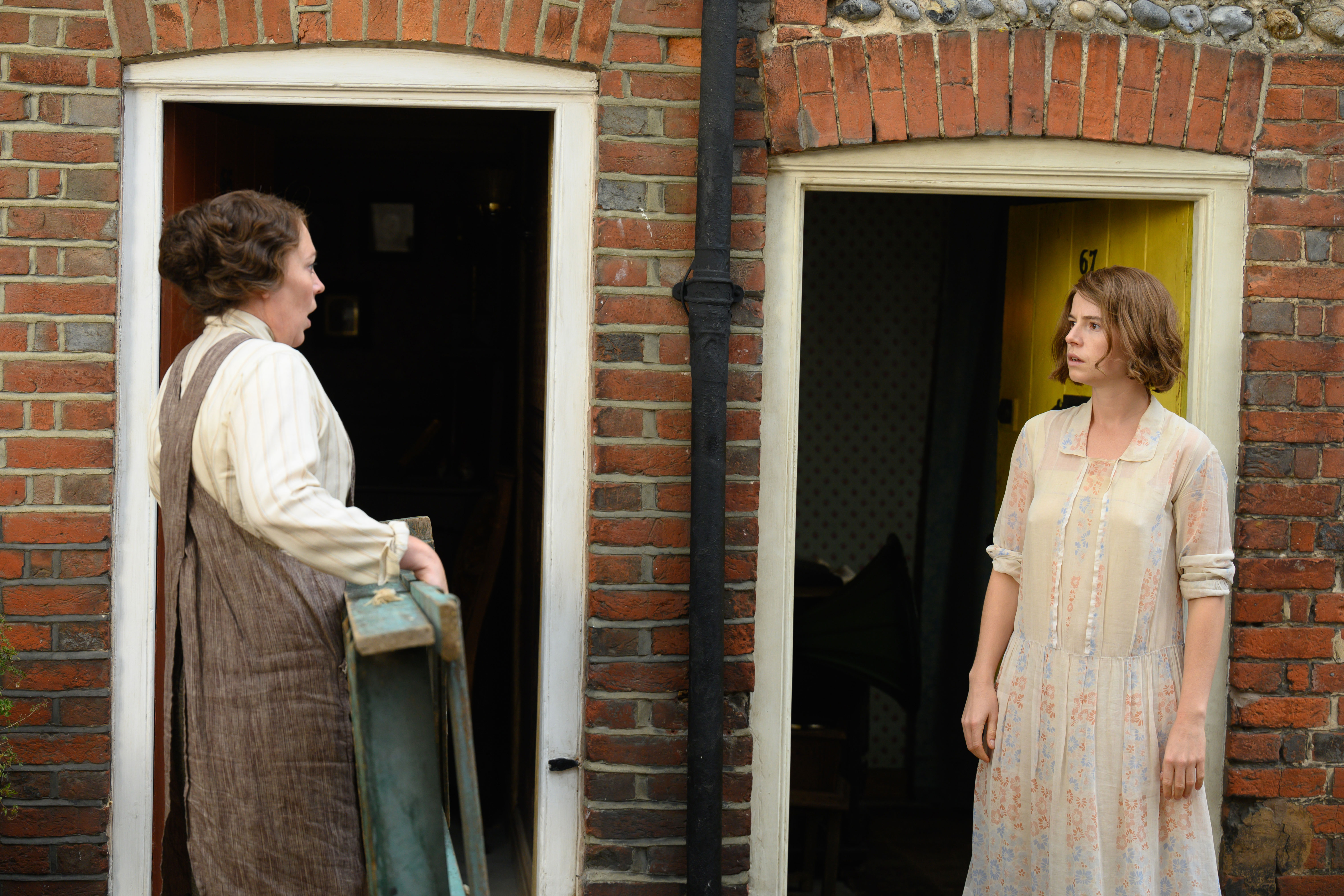
Olivia Colman and Jessie Buckley as warring neighbours in Wicked Little Letters
Now, the elephant in the room.
Colour blind casting. I have thoughts.
I also hesitate to bring it up as I like that it hasn’t been mentioned in the promotion for the film but a discussion is warranted.
The main police woman, based on a real person Gladys Moss, who was a white, English lady is played, brilliantly I will say, by the award winning Indian actor, Anjana Vasan.
At first this was a little distracting as it is set in a small English coastal town, Littlehampton in the 1920s.
The film starts off with a statement.
“This story is more true than you’d think.“
Which is why I was initially distracted by the amount of people of colour (POC) peppered throughout the film.
I grew up in a small English town in the 1970s and there were few people of colour or non-whites living in the area and this was the same in most towns in England for many years.
50 years earlier there were much less of us.
Regarding the film I got to thinking……….
Moss is dealing with a massively patriarchal police system. The real Moss was the first female police officer in Sussex, but was she Indian? Nah. Does it matter? Maybe not. This is a dramatised version of events and is entertainment and the job of the film-maker is to tell a story and do so well.
Hear me now…..
Being an anglo-Indian English actor who has had many conversations with other actor friends of colour about casting over the years and talked about how refreshing it always is when we get cast as a character when our ‘difference’ is not even mentioned and better yet when our character’s name is not linked to our background. This applies mostly to television and film because the theatre is much more forgiving when it comes to colour-blind casting.
I’m into it. Why not?
Now, you may hear some speak of the past tense of the opposite of being asleep. I’m not even going to mention the word. I detest it now. It has become lazily weaponised and I feel that it should be dismissed from the current cultural lexicon like the n word, the w word can go foxy fuck itself. It is a programmed way to maintain an old, outdated way of thinking and is mostly thinly disguised racism.
The pendulum swingeth, as it always does.
Like Dylan said back in the day, “The times, they are a changin’”.
This is not a bad thing. Cast who you want.
Anjana Vasan is great, she imbues the role with the perfect amount of frustration and resilience.

Lolly Adefope, Anjana Vasan and Joanna Scanlan in WIcked Little Letters
Rose Gooding’s boyfriend (Bill Gooding-who was a white British man in real life) is played well by Malachi Kirby, a top actor who previously won the award for Best Supporting Actor at the BAFTAs in 2021 for his role in Steve McQueen’s Small Axe starring opposite my friend Shaun Parkes. Here, he does well with the little he is given to do but the film belongs to Olivia and Jessie and Anjani.
So, colour blind casting…..
By the end I got to thinking about how many white actors have played people of colour over the years in film.
Marlon Brando playing Japanese in The Teahouse of the August Moon
Mickey Rooney playing Japanese in Breakfast at Tiffanys
Fisher Stevens playing Indian in Short Circuit
Jake Gyllenhaal in Prince of Persia
Johnny Depp playing Tonto in The Lone Ranger
and
Everybody playing Jesus
Man, if they can get away with it, and all those examples are them playing leads, front and centre…………
Whether Wicked Little Letters is fantasy or not as far as casting goes, this is a forward step for representation. The more flavours of the rainbow we see, the more the younger generation grow up feeling seen. We live in a flavoursome world. Get used to it.
Look at the Black Panther phenomenon.
This is more powerful, effective and longer lasting than the idea that we must be historically accurate at all times. This is, after all, entertainment.
So, should it matter? I honestly don’t think so. I think it was courageous to tell this story and add actors who weren’t white into the mix. We’re actors. Our colour shouldn’t be a hindrance. This is, on the one hand a film loosely based on history, albeit a light-entertainment one. It is not a documentary and the main point of any film is to tell a story and in this case it is a story worth telling.
The redressing of the balance is long overdue.
To all the people that complained that Star Wars: The Force Awakens and subsequent films were too w word and added to the outrage at the seemingly disgusting fact that people of different hues should be onscreen you can all go (in the immortal words of Elizabeth Darko) “Suck a fuck”.
That goes for all people who use that w word.
S an F.

Jessie Buckley in Wicked little Letters
Back to the film……
Timothy Spall gives another great performance as Edward Swann, Edith’s father, a very controlling and typical 1920s man who has his own demons and limitations. Gemma Jones is great as Victoria Swann, mother to Edith. Other fantastic support comes from the very funny, Joanna Scanlan as Ann, Lolly Adefope as Kate and the mighty Eileen Atkins as Mabel, Paul Chahidi as Chief Constable Spedding and Hugh Skinner as the bumbling Constable Papperwick. It’s nice to see the higher ups being outsmarted and out-policed by Anjana’s Gladys Moss. Sunday night television humour at tis best. Also, shout out to Alisha Weir who plays Rose’s daughter, Nancy.
Thea Sharrock directs with skill and Jonny Sweet writes the hilarious script, which is filled with great jokes and one-liners. The music is deftly provided by Fleabag’s talented sister, Isobel Waller-Bridge.
The cast seem to have tonnes of funnes playing their roles in this riotous comedy with many taking delight in the chance to let their tongues loose with the amount of salty language that is thrown around.
This is like yer Mum or yer Nan’s favourite Sunday night tv show………..with swearing.
Brilliantly entertaining, hilarious, touching and an absolute riot.
Go see it. You’ll have fun. Guaranteed.
Out Now at a cinema near you.
1 hour 40 Minutes


 the movie musings