LEE (2024)


Remove lens cap………..

This is the story of famed photographer, Lee Smith who went from a successful career as a model to a photographer who took some of the most powerful and vital pictures for Vogue during World War 2.
We are taken through Smith’s transition from model and bohemian artist to her need to help wth the war effort through her striking photography.

Photography has always been one of my one passions, the power and impact of the still image can never be overstated. The photographs Lee captured at the end of WW2 are a poignant. testament to the brutality, the fragility and the resilience of life. These images serve not only to remind us but as enduring records of our shared history. Yet, despite the countless times we are confronted with these reflections of our past, we often turn a blind eye, ignoring their importance.
Lest We Forget.
Nearly 80 years has passed since the end of World War 2 and still, atrocities continue. What is wrong with us? Are we so blind or we are predisposed to destruction, killing, savagery and unspeakable cruelty.

Where is our collective empathy? We feel it when we see these haunting images of violence and suffering, and that is why we need stories like Lee’s. 

The Bohemian years.
Kate Winslet as Lee Smith in Lee
The Bohemian years.
Kate Winslet as Lee Smith in Lee

What drives someone to willingly put themselves in harm’s way to capture a fleeting moment? For Lee Smith, it was a desire to be useful. A gifted photographer, who was living in London in 1945, and felt compelled to contribute in some meaningful way. Determined to make a difference, she approached Vogue with a proposal: to travel to the front lines and document the war’s unfolding events through her lens. As expected, the idea was initially dismissed—it was a man’s world, and assignments like this rarely went to women. But perseverance can achieve remarkable things, and Lee refused to back down. Eventually, her persistence paid off, and she made her way to Germany, where she captured on film the final days of World War II.

Alex Garland’s recent Civil War is also about reportage, with the photographers being non-biased, non-partisan, simply determined to capture an honest record of the events unfolding. 

War photographers are just that. Witnesses.
They venture into places most people would avoid at all costs, even soldiers if given a choice, to take pictures, to remember, to make a record, to bear witness.

Picture this.
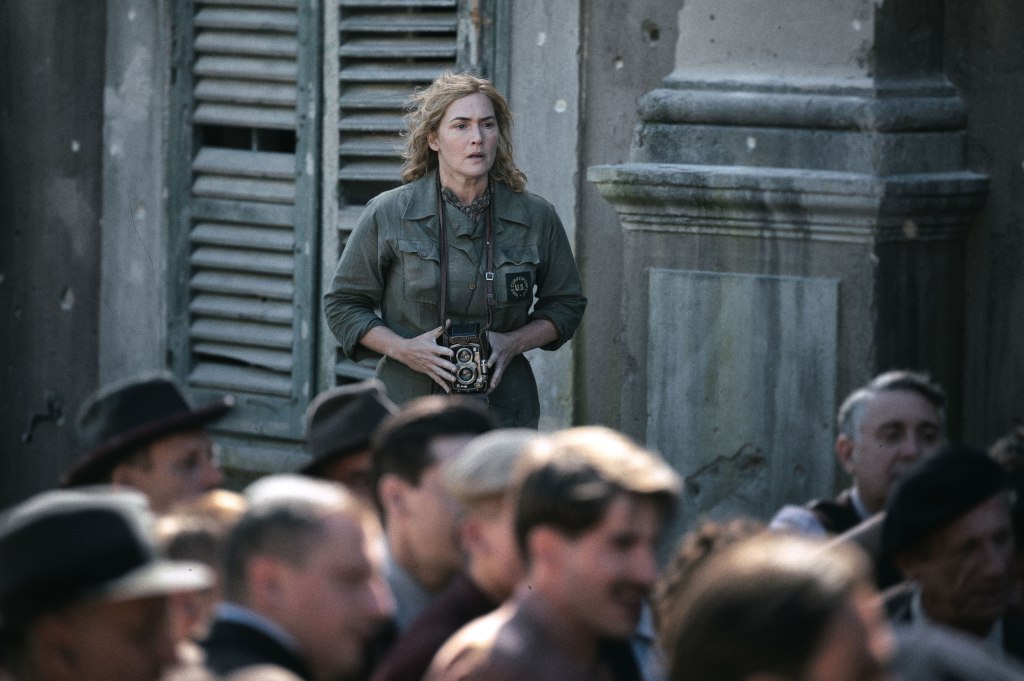
Kate Winslet as Lee Smith in Lee
Picture this.
Kate Winslet as Lee Smith in Lee

Kate Winslet is truly a national treasure and it seems another Oscar nod could be on the horizon for the great actress. She is consistently brilliant, always bringing believability and honesty to her work. She never fails to imbue her characters with three dimensions, a true humanity that always feels layered and lived in.

The rest of the cast are, without exception, fabulous. Alexander Skarsgard shines as Roland, Lee’s great love, while Josh O’ Connor delivers a gentle and compelling performance as Antony who interviews Lee in her later years. Andy Samberg takes on the role of  David Scherman, Lee’s fellow photographer and friend,  and brings his usual charm to the role. Marion Cotillard as her friend, Solange with grace and elegance and the rising French star, Noemie Merlant impresses as Nusch Eluard. Special mentions go to Samuel Barnett and Andrea Riseborough as Audrey Withers and Cecil Beaton of Vogue London respectively, who both have a blast with their character work.

The film is based on a 1995 biography, The Lives of Lee Miller and the mighty Alexandre Desplat is on soundtrack duties, again delivering a beautiful score.

The director, Ellen Kuras makes her feature film debut with confidence and clarity. She has been in the film business for a while primarily working as a cinematographer for the likes of Spike Lee (on He Got Game, Summer of Sam and Bamboozled), Ted Demme (on Blow), Jim Jarmusch (on Coffee and Cigarettes) and Michel Gondry (on both Eternal Sunshine of the Spotless Mind and Be Kind Rewind). She had previously worked with Kate Winslet on Eternal Sunshine and long term associations can lead to great trust and a shorthand that have the potential to create special works.

The film took 8 years to make. Years ago Ellen Kuras read a book about Lee Smith and sent it to Winslet. Sometime later when Winslet started developing a movie project about Smith she asked Kuras to direct it and now the world gets to know and see who the talented and brave Lee Smith was.
And so they should.
This is an important film about standing up for something honourable.
We all need a bit of this in our lives.

Replace lens cap…..

See it now at a cinema near you.

116 Minutes

MEGALOPOLIS (2024)


Amidst the crumbling landscape of a futuristic New York City, here named New Rome, renowned architect Cesar Catalina (Adam Driver) envisions a sustainable utopia and is driven to revitalise the city both structurally and socially. Opposing him at every turn is Mayor Franklin Cicero (Giancarlo Esposito) who resolutely clings to his conservative values and resists any form of change. Caught between the two is Julia Cicero (Nathalie Emmanuel), the mayor’s daughter who finds herself drawn to Cesar’s bold vision, his genius and is intrigued by the possibilities he and it offers.

At the ripe age of 84, director Francis Ford Coppola has delivered an intelligent, Roman epic that reflects on our society’s future and the challenges we face. This ambitious epic is sure to provoke strong reactions from those viewers who cling to the status quo, much like Giancarlo Esposito’s Mayor. The Western approach to storytelling—the Campbell model—dominates much of our narrative terrain and while I appreciate a classic Hero’s Journey, I also embrace alternative ways of storytelling. This is why I often gravitate toward films in languages other than English—stories told from unique cultural and structural perspectives that broaden our understanding of storytelling and allow us different ways of ingesting narrative.

Megalopolis embodies a distinctly European aesthetic, style, and content, and if this turns out to be Coppola’s final film, he will have gifted us something for the ages.

Adam Driver as Cesar Catilina and Nathalie Emmanuel as Julia Cicero in Megalopolis. Photo Credit: Courtesy of Lionsgate

FFC has always backed himself, demonstrating a steadfast belief in his artistic vision throughout his career. Understanding that true creative control requires self-financing, he made the bold decision to sell a portion of his wine business to fund the production of Megalopolis.
That’s surely something to respect.

He chose to film in Atlanta for its advantageous tax benefits, state-of-the-art facilities, skilled local crews, along with the wealth of classical buildings that provide perfect settings. Principal photography began in November 2022 and wrapped in March 2023, with a production budget of $120 million.

Coppola himself said:
“The seeds for MEGALOPOLIS were planted when as a kid I saw H.G. Wells’ Things to Come. This 1930s Korda classic is about building the world of tomorrow, and has always been with me, first as the ‘boy scientist’ I was and later as a filmmaker.”
He has been gathering notes for Megalopolis since the 1980s.

Loosely inspired by what was known as the Catiline Conspiracy, Megalopolis references the efforts of the popular Roman architect Lucius Sergius Catiline, who attempted to overthrow the Roman Empire in 63 BC. Had he succeeded, his plan was to dismantle the upper classes and liberate the people from their debts.

Aubrey Plaza as Wow Platinum in Megalopolis. Photo Credit: Courtesy of Lionsgate

I love it when a filmmaker ventures into new territory, drawing from the past to create something fresh, innovative, and daring. That’s exactly what Coppola has accomplished here. It’s not essential to cater to the everyone—art, subjectivity and all that.

In another decade, one more accustomed to ingesting stories in a complex, layered way, this film might have received greater recognition from the public, and I genuinely hope it does in 2024. There’s a wealth of profound philosophy embedded within, and if it introduces the mainstream to the stoic thoughts of Marcus Aurelius amongst many others, then that’s a success in my book.

Coppola said:
“It’s my dream that MEGALOPOLIS will (have) audiences discussing (it) afterwards, not their new diets, or resolutions not to smoke, but rather this simple question: “Is the society in which we live the only one available to us?” ”

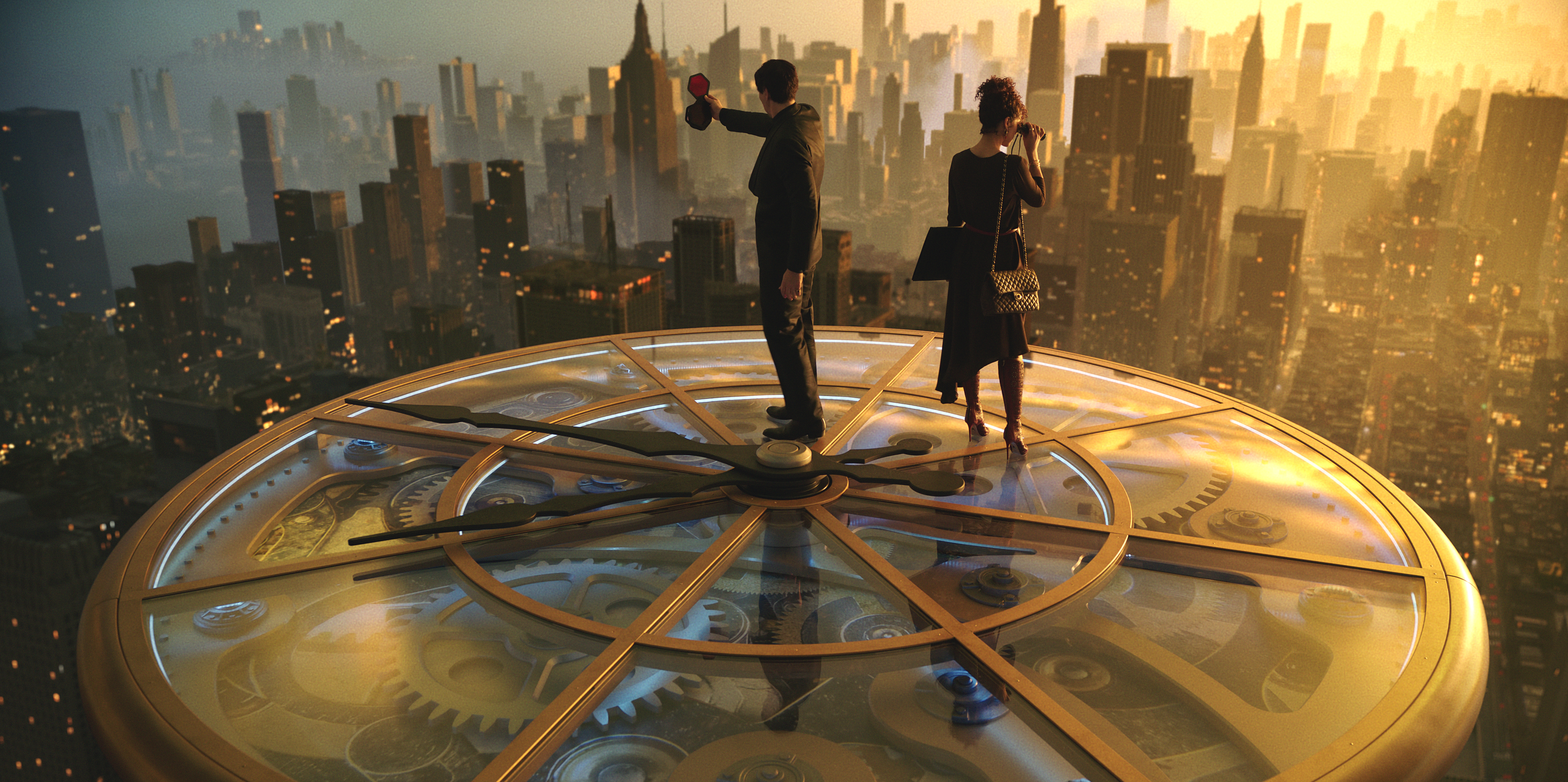
Visually, this film is stunning; thematically, it’s deeply humanistic, and aesthetically, it’s a feast for the senses. Its homage to Metropolis (1927) is both respectful and beautifully executed.

Megalopolis. Photo Credit: Courtesy of Lionsgate

The performances are all top notch. Adam Driver as the architect/designer, Catilina Caesar gets to play many facets of a man trying to make the world a better place without having any kind of narcissistic saviour complex that many of today’s so called innovators have (tech bros, I’m looking at you). Nathalie Emmanuel imbues her role of Julia Cicero with love, heart, passion and real care. The mighty Giancarlo Esposito as her father Mayor Cicero, battles with his conservative, status quo loving nature, again bringing layers and nuance. Aubrey Plaza as the desperately ambitious Wow Platinum (great name) brings a 1930s kooky starlet sensibility with claws and maybe steals the film.

Shia LaBoeuf is suitably power hungry, unhinged and attention seeking as Clodio.
Jon Voight has a shed load of fun as the banker Crassus and what a joy it is to see this man, as nuts as he may be in real life, show off his incredible acting skills.

This is the 6th time that Laurence Fishburne has worked with Coppola (he was cut out of One From the Heart) and here he is brilliant (as usual) in the role of Fundi Romane, the driver, protective aide and friend to Cesar Catilina. Using him as the film’s narrator was never going to be a mistake.
It’s also lovely to see Coppola’s sister AKA Connie Corleone/Adrian Pennino herself, Talia Shire turn up as Cesar Catilina’s Mother, Constance Crassus Catilina.

Special mention goes to Kathryn Hunter playing the Mayor’s wife, Teresa Cicero who inhabits the character with wisdom, compassion and heart.

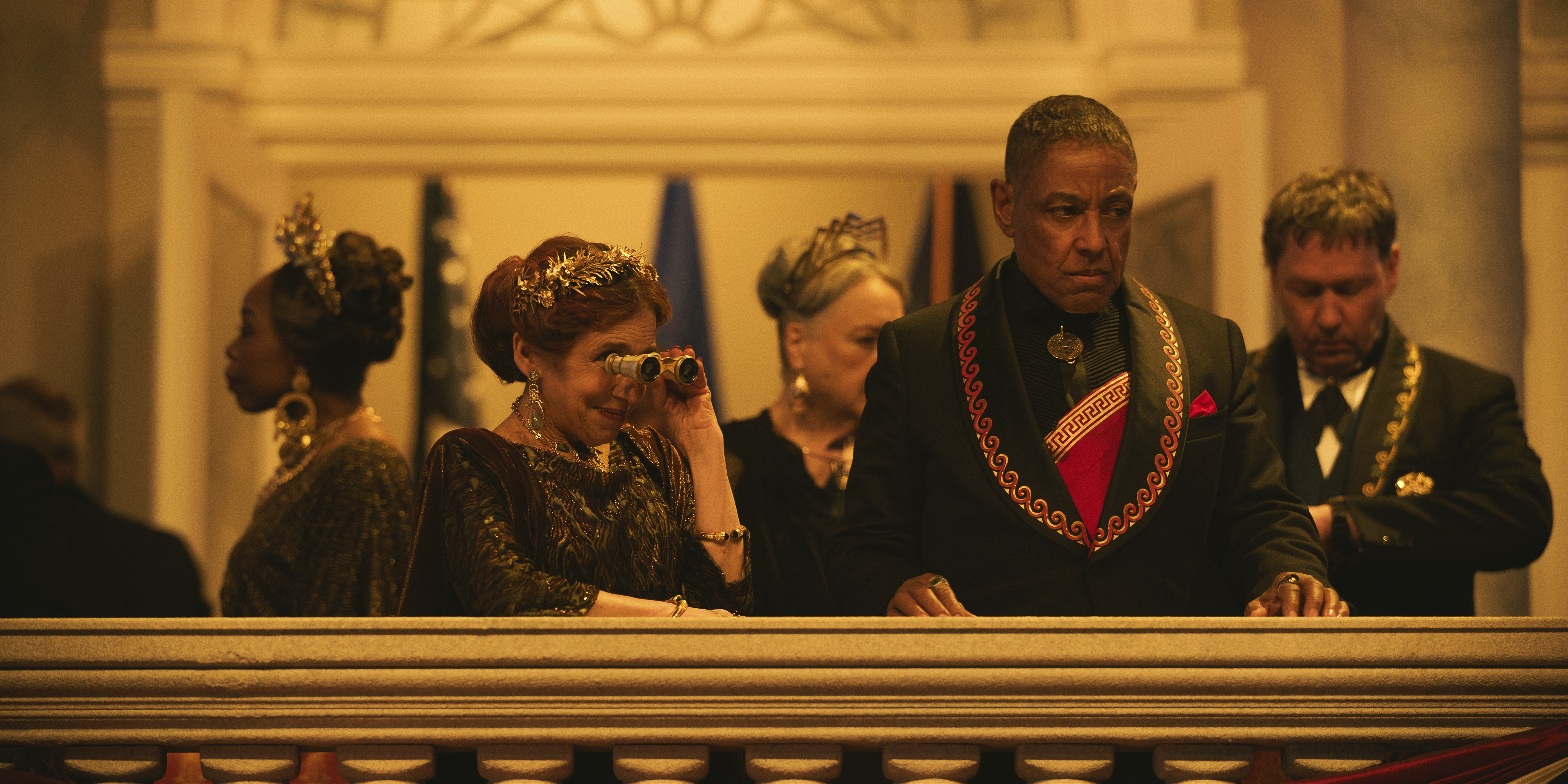
Kathryn Hunter as Teresa Cicero and Giancarlo Esposito  as Mayor Cicero in Megalopolis. Photo Credit: Courtesy of Lionsgate
Kathryn Hunter as Teresa Cicero and Giancarlo Esposito as Mayor Cicero in Megalopolis. Photo Credit: Courtesy of Lionsgate

I’ll tell you what’s in short supply these days: hope. Whether it’s the elections (no matter the country), the climate, the systems we rely on, or even our entertainment—overflowing with cynicism (some excellent and warranted, some not so much)—we are bombarded with nursery-rhyme narratives, black-and-white, binary choices: good/bad, right/left, up/down, blah blah blah.
Life, and the world we live in, is complicated, layered, and filled with nuance and detail we seem unwilling to acknowledge or accept.
In Megalopolis, Cesar Catalina offers hope and a way forward out of the mess we find ourselves in, albeit in a science fictional way.

Ambitious, creative and daring, intelligent and non-pandering to the masses, this, whilst not being perfect, is a welcome addition to Coppolla’s filmmaking output and a worthy swansong to an incredible and artistic career.
See it in all its complicated beauty on the big screen and support a director who dares to try something different.

2 hrs and 18 Minutes