THE MOOGAI (2024)


A young Australian Indigenous couple are terrorised by an ancient child-stealing spirit.

Australian horror, at its best, has always managed to unnerve and upset.
Like all great horror, it often stems from or is deeply linked to human trauma.
Whether through the feverish delirium of Wake in Fright, the nightmarish mystery of Picnic at Hanging Rock, or more recently, the king of the outback boogeymen, Mick Taylor in the Wolf Creek franchise, Australian horror taps into the land’s ancient and haunting presence.
More recently in the brilliant, grief driven horror film The Babadook, there is a sense of isolation that mirrors the harsh and unforgiving landscape.

These stories, woven from trauma and the landscape, reflect Australia’s unique relationship with horror.
Before the Moogai comes a visiting in The Moogai
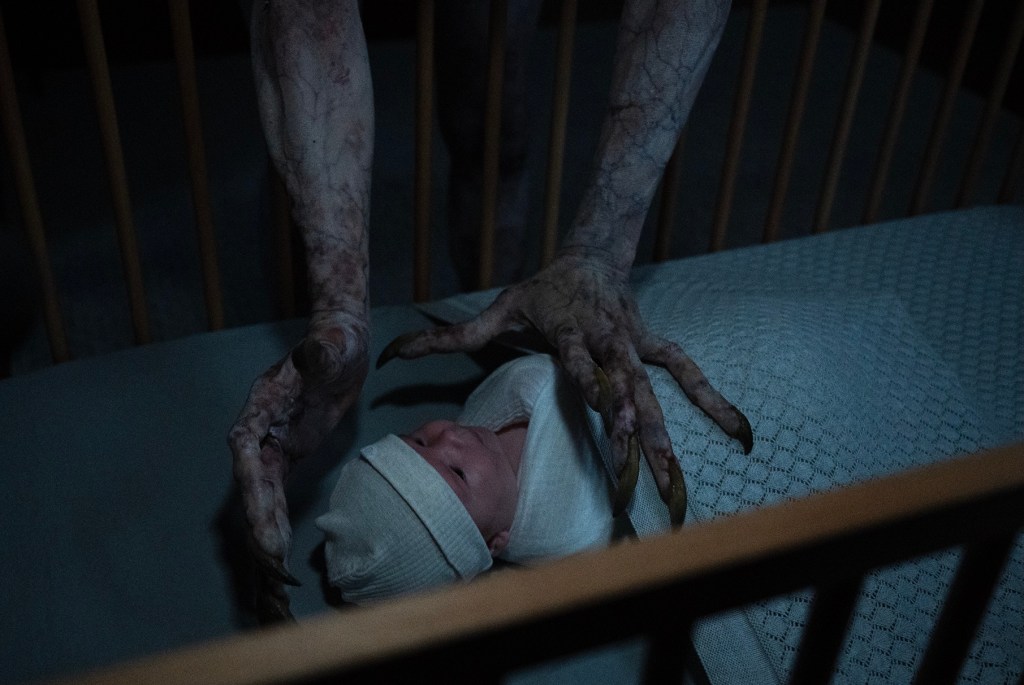
Before the Moogai comes a visiting. THE MOOGAI/PHOTO ELISE LOCKWOOD

Somewhere within the scant 86 minutes of The Moogai lies the potential for an incredible horror film. There are moments that propel it towards greatness but unfortunately it stumbles along the way and fails to make the lasting impression it aims for.

Utilising the stolen generation as a horror setting is a concept rich with potential, like a match made in heavenly hell but the finished product doesn’t quite deliver us to evil.

At times it feels undercooked; later on, transitions between scenes seem rushed and some of the performances feel like they’re still at an early stage in rehearsals, with choices that seem too obvious, on the nose and underdeveloped.
It’s a shame because there are some incredible elements in the film. The creature design is extraordinary and genuinely inventive, a welcome new addition to the chid-catcher trope.
Three generations gear up for a battle.
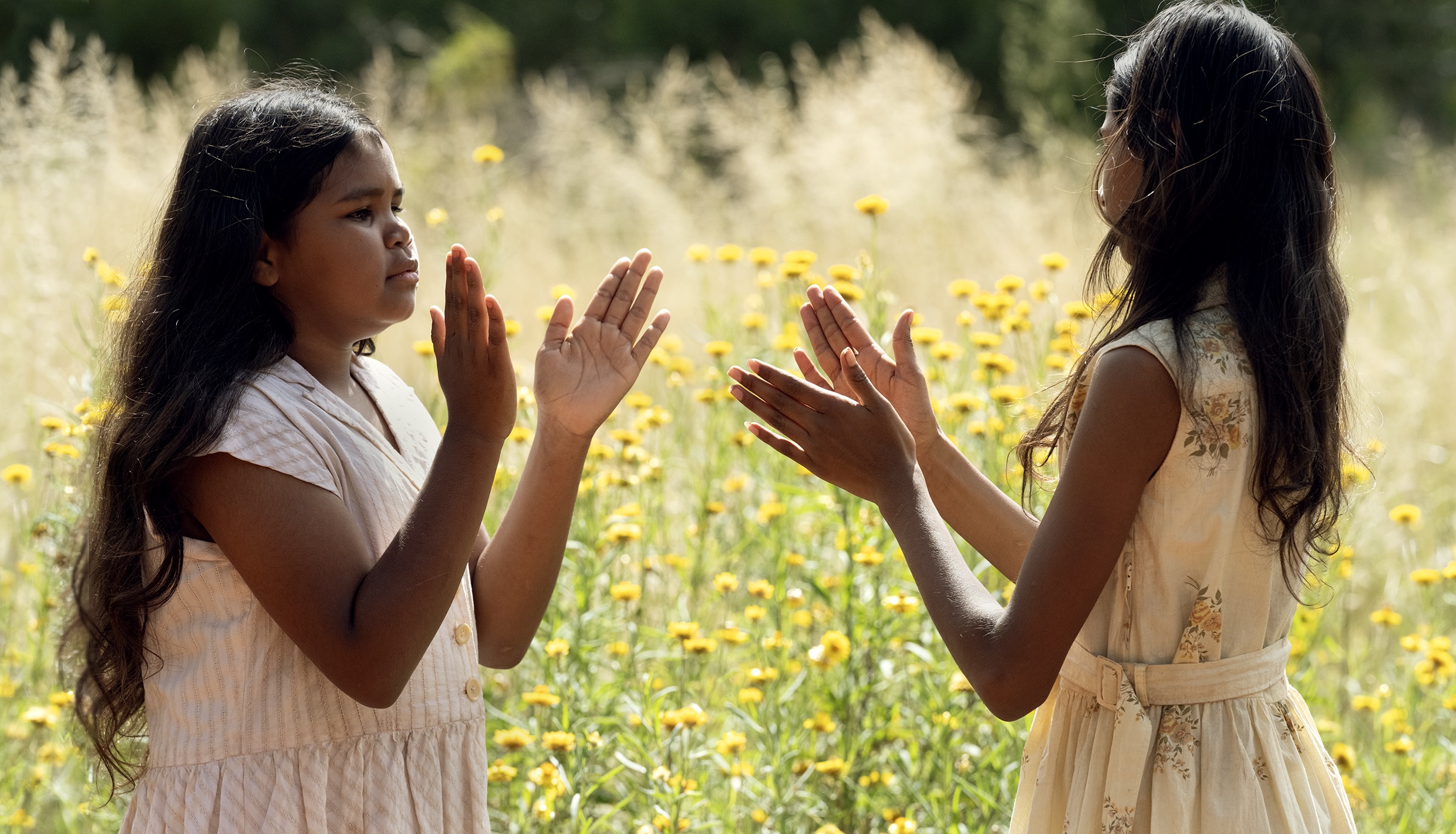
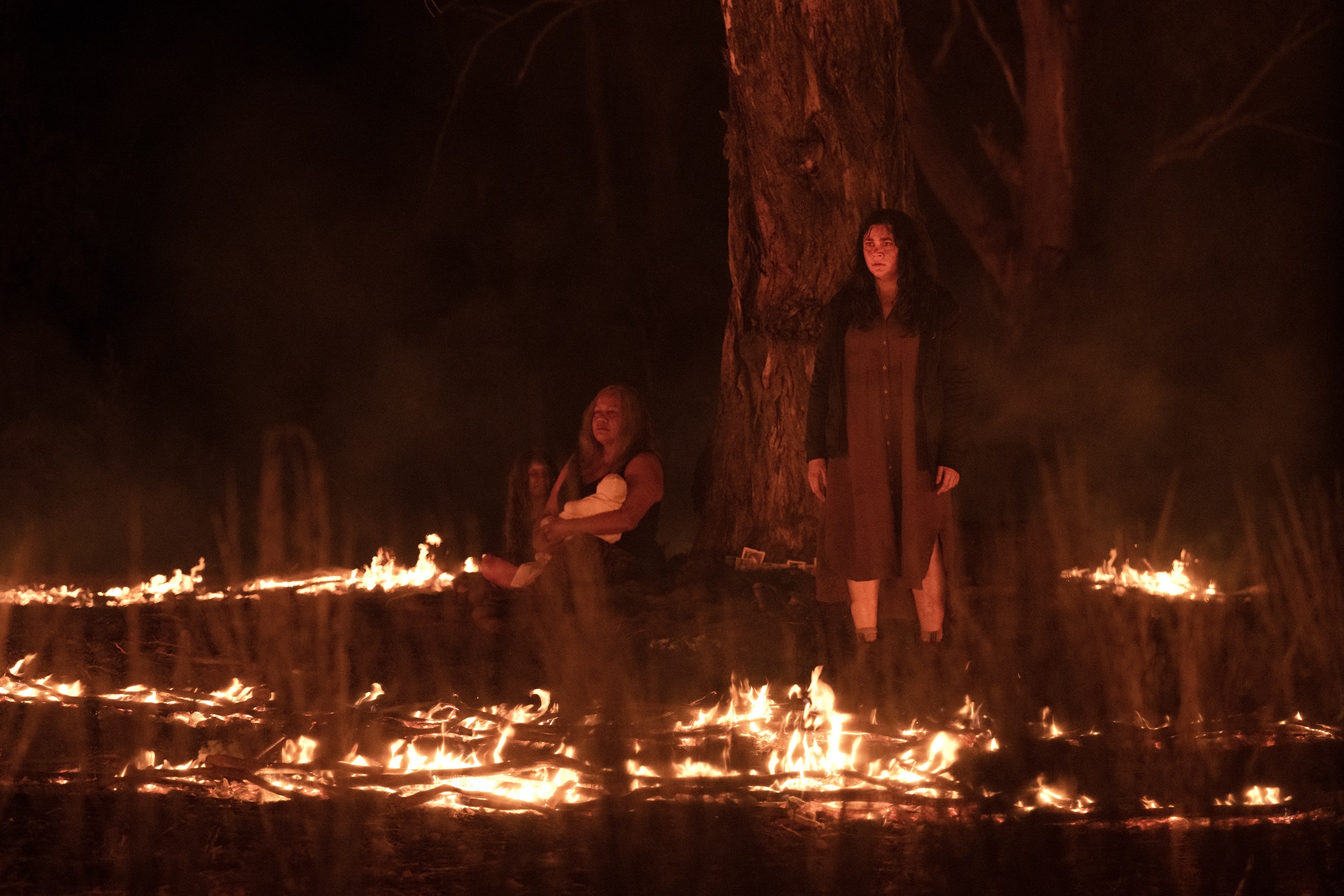
Three generations gear up for a battle. PHOTO CREDIT: ELISE LOCKWOOD

Indigenous writer and director Jon Bell makes his feature film debut showing great promise and utilising a cast of well-known indigenous talent including Meyne Wyatt, Tessa Rose, Clarence Ryan, Shari Sebbens and Australian actors, Bella Heathcote, Tara Morice, Nicholas Cassim and Toby Leonard Moore.

The subject matter is fantastic, there should definitely be more horror films that draw from the Australian Aboriginal culture, a genre that is criminally underrepresented.

This land is ancient and filled with stories that should have a much wider audience.
I applaud the effort and look forward to seeing more from this interesting Indigenous director.

I’ll leave you with some words about the title from the director:
“There are three words we’ve traditionally used to describe spirits – Moogai, Wongai and Dogai,” he explains. “We still use Moogai to describe monsters – similar to a boogeyman – and then we also use Dogai to describe white people. I think when white people first arrived, a lot of blackfellas thought they were returned spirits, so today we still use it as a colloquialism for white people.”

Out now at a cinema near you.
86 Minutes

LEE (2024)


Remove lens cap………..

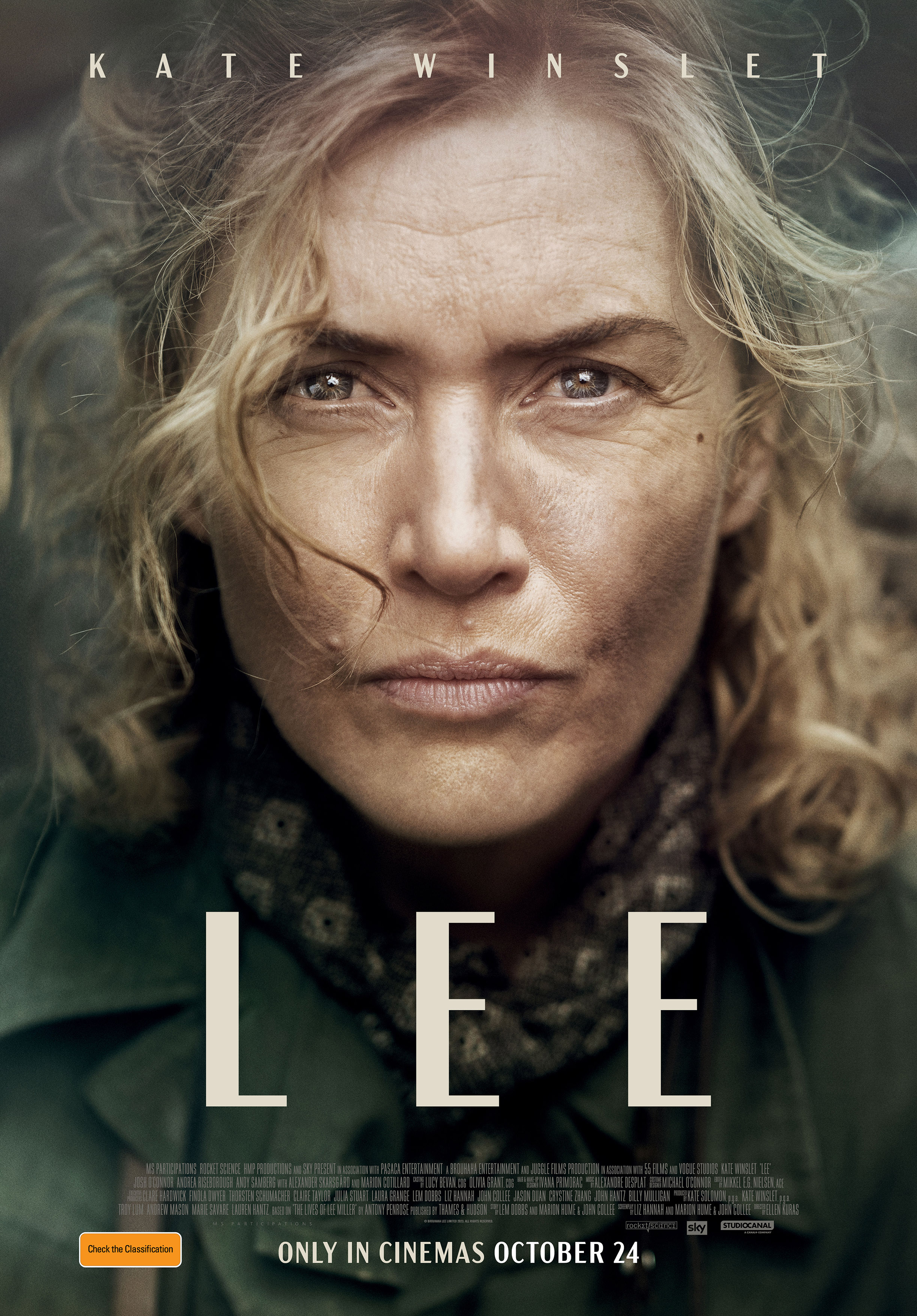
This is the story of famed photographer, Lee Smith who went from a successful career as a model to a photographer who took some of the most powerful and vital pictures for Vogue during World War 2.
We are taken through Smith’s transition from model and bohemian artist to her need to help wth the war effort through her striking photography.

Photography has always been one of my one passions, the power and impact of the still image can never be overstated. The photographs Lee captured at the end of WW2 are a poignant. testament to the brutality, the fragility and the resilience of life. These images serve not only to remind us but as enduring records of our shared history. Yet, despite the countless times we are confronted with these reflections of our past, we often turn a blind eye, ignoring their importance.
Lest We Forget.
Nearly 80 years has passed since the end of World War 2 and still, atrocities continue. What is wrong with us? Are we so blind or we are predisposed to destruction, killing, savagery and unspeakable cruelty.

Where is our collective empathy? We feel it when we see these haunting images of violence and suffering, and that is why we need stories like Lee’s. 

The Bohemian years.
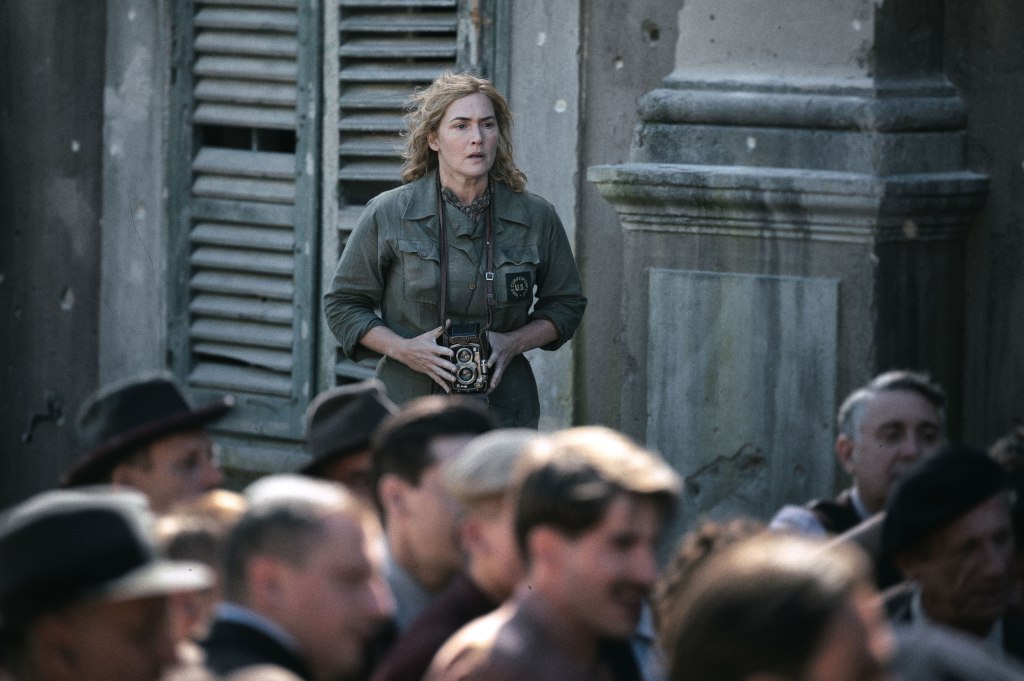
Kate Winslet as Lee Smith in Lee
The Bohemian years.
Kate Winslet as Lee Smith in Lee

What drives someone to willingly put themselves in harm’s way to capture a fleeting moment? For Lee Smith, it was a desire to be useful. A gifted photographer, who was living in London in 1945, and felt compelled to contribute in some meaningful way. Determined to make a difference, she approached Vogue with a proposal: to travel to the front lines and document the war’s unfolding events through her lens. As expected, the idea was initially dismissed—it was a man’s world, and assignments like this rarely went to women. But perseverance can achieve remarkable things, and Lee refused to back down. Eventually, her persistence paid off, and she made her way to Germany, where she captured on film the final days of World War II.

Alex Garland’s recent Civil War is also about reportage, with the photographers being non-biased, non-partisan, simply determined to capture an honest record of the events unfolding. 

War photographers are just that. Witnesses.
They venture into places most people would avoid at all costs, even soldiers if given a choice, to take pictures, to remember, to make a record, to bear witness.

Picture this.
Kate Winslet as Lee Smith in Lee
Picture this.
Kate Winslet as Lee Smith in Lee

Kate Winslet is truly a national treasure and it seems another Oscar nod could be on the horizon for the great actress. She is consistently brilliant, always bringing believability and honesty to her work. She never fails to imbue her characters with three dimensions, a true humanity that always feels layered and lived in.

The rest of the cast are, without exception, fabulous. Alexander Skarsgard shines as Roland, Lee’s great love, while Josh O’ Connor delivers a gentle and compelling performance as Antony who interviews Lee in her later years. Andy Samberg takes on the role of  David Scherman, Lee’s fellow photographer and friend,  and brings his usual charm to the role. Marion Cotillard as her friend, Solange with grace and elegance and the rising French star, Noemie Merlant impresses as Nusch Eluard. Special mentions go to Samuel Barnett and Andrea Riseborough as Audrey Withers and Cecil Beaton of Vogue London respectively, who both have a blast with their character work.

The film is based on a 1995 biography, The Lives of Lee Miller and the mighty Alexandre Desplat is on soundtrack duties, again delivering a beautiful score.

The director, Ellen Kuras makes her feature film debut with confidence and clarity. She has been in the film business for a while primarily working as a cinematographer for the likes of Spike Lee (on He Got Game, Summer of Sam and Bamboozled), Ted Demme (on Blow), Jim Jarmusch (on Coffee and Cigarettes) and Michel Gondry (on both Eternal Sunshine of the Spotless Mind and Be Kind Rewind). She had previously worked with Kate Winslet on Eternal Sunshine and long term associations can lead to great trust and a shorthand that have the potential to create special works.

The film took 8 years to make. Years ago Ellen Kuras read a book about Lee Smith and sent it to Winslet. Sometime later when Winslet started developing a movie project about Smith she asked Kuras to direct it and now the world gets to know and see who the talented and brave Lee Smith was.
And so they should.
This is an important film about standing up for something honourable.
We all need a bit of this in our lives.

Replace lens cap…..

See it now at a cinema near you.

116 Minutes